
Exhibiting is one of the biggest line items in a B2B marketing budget, and the stall is usually the largest part of it. Cost-effective exhibition stall design and fabrication in India lets you control that cost without settling for a plain, forgettable stand. This guide breaks down what actually drives the price, where the smart savings sit, and how to protect quality while you protect your budget.
What Actually Drives the Cost of an Exhibition Stall
Before you can save money, you need to know where it goes. A stall quote is not one number — it is several separate costs bundled together, and each one moves for different reasons.
Most of your budget sits in five places:
- Design and 3D visualisation — the studio hours that turn your brief into a stand.
- Fabrication and materials — structure, panels, counters, flooring, and finishing.
- Graphics and lighting — printing, branding, and the light that makes it all read.
- Logistics — transport to the venue, storage, and handling.
- On-site work — installation, dismantling, and supervision during build-up.
When you can see these parts separately, you stop comparing quotes on the headline price alone. You start asking the more useful question: what is included, and where can we be smarter?
Cost-Effective Is Not the Same as Cheap
The two words get confused, and it costs exhibitors real money. Cheap means the lowest possible price, often by leaving things out. Cost-effective means the best value for what you actually need — the right stand, priced fairly, with nothing hidden.
A cheap stall looks like a saving until the show week arrives: thin materials, poor finishing, missing supervision, and a stand that looks nothing like the render. A cost-effective stall costs the same on paper but is planned to work — and to be reused. The best way to judge value is not price per stand, but cost per show across the life of the build.
The Biggest Cost Decision: Custom, Modular, or Hybrid
How your stand is built matters more to the budget than almost any other choice. There are three common routes, and the right one depends on your goals, not your fear of the invoice.
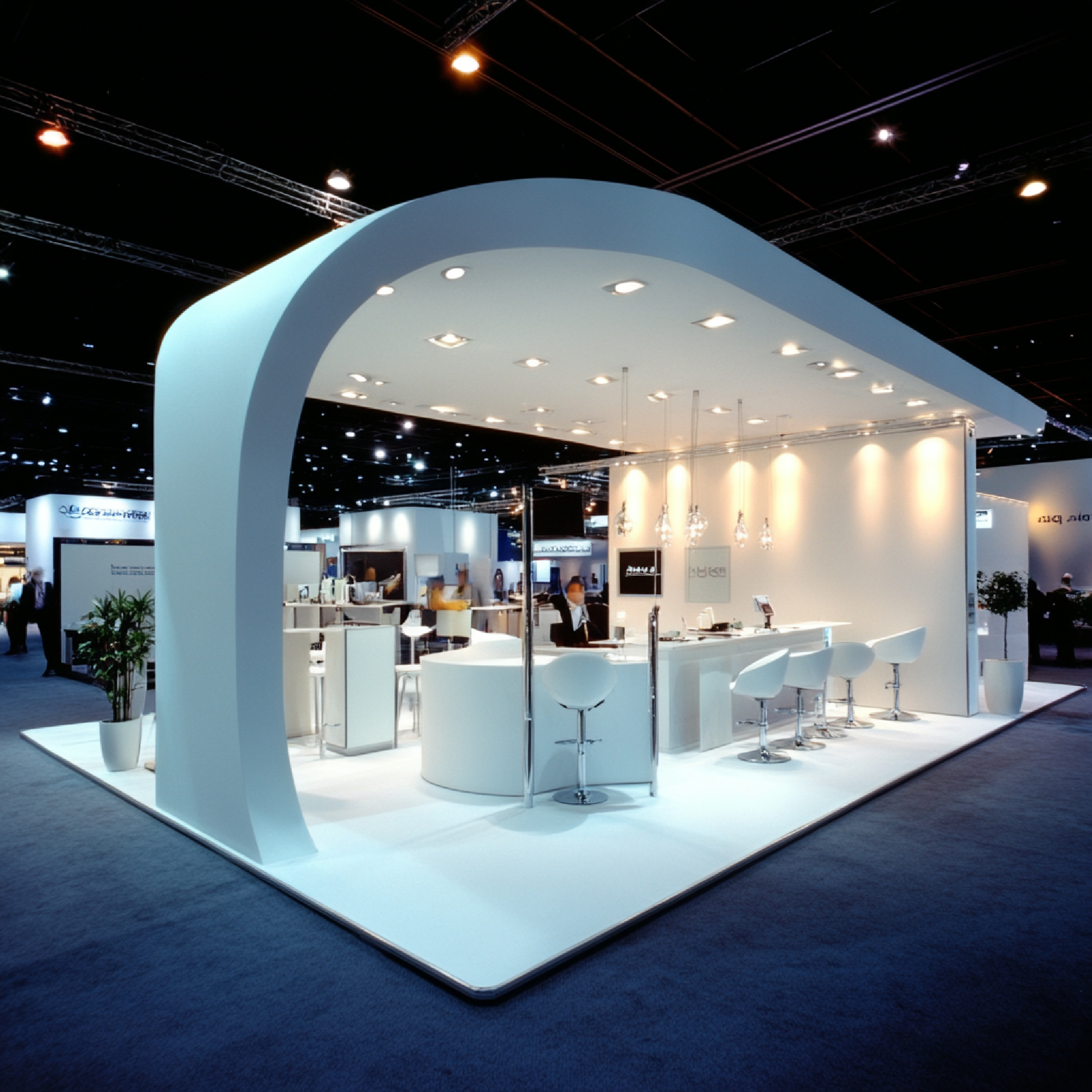
- Custom build. Designed and fabricated from scratch around your brand. The highest impact and the most freedom, and the right call when the stand is central to a launch or a flagship fair.
- Modular system. Reusable frames and panels you re-skin for each show. Lower cost, fast to install, and easy to adapt, though less distinctive than a full custom exhibition stand design.
- Hybrid. A modular core with custom feature elements — a branded arch, a reception counter, a backlit wall. This is where most cost-effective stalls land, because you pay for standout only where visitors actually look.
A good partner will recommend the honest option for your budget, not the most expensive one. If every conversation pushes you toward full custom regardless of the brief, treat that as a signal.
Match the Build to Your Stand Size
Cost-effectiveness also depends on getting the ambition right for the space. Spending like an island stand on a small shell-scheme booth is a common and expensive mismatch. Here is a simple way to think about it by size.
- Small stands (around 3×3 m). Focus the budget on one strong branded wall, clean graphics, and good lighting. A smart upgrade to a shell scheme often beats a full custom build here.
- Mid stands (around 6×3 to 6×6 m). A hybrid build usually wins — a modular structure with one or two custom feature zones for meetings or product display.
- Large and island stands (6×6 m and up). Custom construction earns its cost, but design for reuse from day one so the investment carries across multiple fairs.
Deciding this early prevents the most common budget leak: paying for a level of finish the stand size does not need.
Where Fabrication in India Keeps Costs Down
India has deep, skilled design and fabrication capacity at a lower cost base than many Western markets, and much of that work can be produced in-house rather than outsourced. That is where genuine savings come from — not from thinner materials or shortcuts.
You save most when a single workshop handles design, structure, graphics, and finishing under one roof. There is no margin stacking between separate suppliers, quality control stays in one place, and changes are faster to make. Paired with turnkey booth solutions — where one team owns design, build, logistics, and on-site work — you avoid the gaps where cost and blame usually hide.
A Cost-Effective Fabrication Checklist
You control more of the final price than you might think. Use these steps to lower cost while protecting what matters.
- Start early. Rushed timelines force premium production and freight. Early planning is the cheapest saving available.
- Give a clear brief. Fair, stand size, objectives, and a budget range up front lead to accurate quotes and fewer costly revisions.
- Design for reuse. Ask for modular elements you can re-skin across shows and sizes. One investment, several fairs.
- Spend on the visitor’s eye line. Put budget into graphics, lighting, and open space visitors see; save on structure they never notice.
- Get an itemised quote. Insist on inclusions and exclusions in writing, so comparisons are honest and the show holds no surprises.
- Confirm on-site supervision. A named supervisor at build-up is not an extra — it is what protects the whole spend when the hall opens on a fixed date.
Follow these six and you protect your budget and your brand at the same time.
Planning for Fairs Across India
Domestic exhibiting has its own logistics, and a partner who knows the halls saves you time and money. Venue rules, height limits, and build-up windows differ between Bharat Mandapam at Pragati Maidan in New Delhi, the Bombay Exhibition Centre in Mumbai, India Expo Mart in Greater Noida, and the Bangalore International Exhibition Centre.
The advantage of designing and fabricating within India is short internal transport and a team that can be on the floor during build-up. That keeps freight low and makes on-time delivery far easier to guarantee. Whether the hall is in Delhi, Mumbai, Bengaluru, or Hyderabad, one accountable partner with a clear schedule is what turns a plan into a stand that is ready when the doors open.
Planning to exhibit in Europe as well? The same cost discipline applies abroad — our guide to choosing an exhibition stand builder in Germany covers venue rules and on-site delivery for international fairs.
Mistakes That Quietly Inflate Your Stall Budget
Cost-effective is good. Careless is not. These are the traps that add cost without adding value.
- Choosing on headline price alone. The lowest number often excludes essentials you will pay for anyway.
- Ignoring reuse. Paying full price for a single-use stand every year is the most expensive habit in exhibiting.
- Deciding late. Rushed timelines add premium production and freight, and leave you fewer choices.
- Unclear ownership. When no one is accountable across design, build, and logistics, problems fall into the gaps between suppliers.
Frequently Asked Questions
Is cost-effective exhibition stall fabrication in India lower quality?
No, when the partner builds to proper standards. The lower price comes from a lower cost base for skilled design and fabrication in India, not from cheaper materials or shortcuts. Ask for real build photos and venue references to confirm.
How do I keep a stall on budget without making it look cheap?
Decide the build type and stand size honestly, spend on the graphics and lighting visitors actually see, and design for reuse. A hybrid build — a modular core with a few custom feature zones — usually gives the best value.
Custom, modular, or hybrid — which is most cost-effective?
For most exhibitors, hybrid. You get standout where it matters and reusable, lower-cost structure everywhere else. Full custom is worth it for flagship fairs and larger stands designed to be reused.
What should a cost-effective stall quote include?
Design and revisions, materials and construction, graphics, lighting, transport, installation and dismantling, and on-site supervision. If any are missing, the price is incomplete, not cheaper.
Can the same stall be reused at more than one fair?
Yes. Ask for modular construction so panels and structure adapt to different sizes and venues. Reuse is one of the biggest long-term savings in exhibiting.
How early should I start planning a stall in India?
As early as possible. Good workshops book out ahead of major fairs, and late starts add rush production and freight costs. Starting months ahead is the cheapest saving available.
Why Exhibitors Choose AUREXIA Studio
At AUREXIA Studio, we design and fabricate custom exhibition stalls in India for B2B companies exhibiting across India, Germany, Poland, the UAE, the UK, and wider Europe. We work as one accountable partner from the first concept to on-site handover — pairing a lower production cost base with international quality standards and honest, itemised pricing.
Our services include:
- Custom Exhibition Stall Design
- 3D Stall Design & Visualization
- Stand Fabrication & Production
- Exhibition Graphics & Branding
- Installation & Dismantling
- On-Site Project Management
- Turnkey Exhibition Solutions Across India, Europe, and the UAE
We keep the pricing clear, the communication straight, and the delivery on time — so you get a stall that reflects your brand without straining your budget.
Planning a stall for a fair in India or abroad? Talk to our design team for honest advice and a fair, itemised quote.